
Kids Jiu Jitsu - Near Me In Knoxville TN
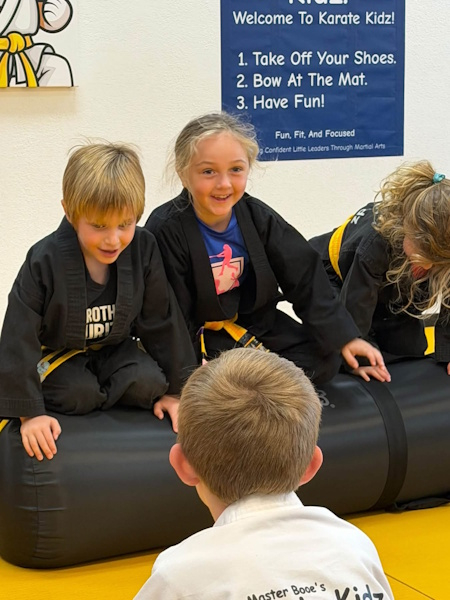
Are there kid focused Jiu Jitsu programs near me in Knoxville? As parents, we all want our kids to excel, to strive, and to improve in something. Not just the usual “play” as toddlers, but rather grow in character through a hobby or activity. The Martial Arts has been fulfilling this need for centuries among adults and children alike. There are many different styles, but Jiu Jitsu has become more popular in the last few decades.
Our other styles promise to be kid friendly and help your child, is it the same for our Jiu Jitsu?
There are kid Jiu Jitsu classes in Knoxville! With Master Booe’s Karate Kidz, we have a blended style incorporating Jiu Jitsu and other grappling styles. The key is teaching these styles in ways that are both engaging and appropriate for kids. Our focus is using Jiu Jitsu to help build confidence, and control over one’s body.
If interested, follow this link for a FREE trial class!
What even is Jiu Jitsu? Is Jiu Jitsu appropriate for kids? What age would best start Jiu Jitsu? Can a 3 year old learn the style? I’ll attempt to answer all of these questions and more down below!
What Should Parents Know About Jiu Jitsu
There are all kinds of reasons why a parent might consider Jiu Jitsu or the broader Martial Arts for their child. Little ones wanting to be “ninjas”, a need for confidence, better control over one’s body, or maybe having gone through Martial Arts themselves at a similar age.
But, why specifically Jiu Jitsu? What even is Jiu Jitsu?
Jiu Jitsu is a largely Japanese Martial Art dating back over a thousand years ago, with a new form “Brazilian Jiu Jitsu” taking the a current cultural spotlight. Jiu Jitsu is a style focused less on punches and kicks, but grappling and joint locks. Brazilian Jiu Jitsu heavily emphasizes the grappling aspect. Armenian Jiu Jitsu is a combination of Judo, Jiu Jitsu, and wrestling.
What some might think of Martial Arts as high kicks, knife hands, and other strikes, traditional Jiu Jitsu is more about ways to subdue an opponent, usually without strikes. In feudal Japan, the Samurai ruled with an iron fist. As such, a Samurai's Jiu Jitsu was a response to armed and armored aggressors.
How do you stop someone who’s both armored and armed with a weapon? Not with punches and kicks, Jit Jitsu was the answer. Closing the distance and controlling arms and legs, taking them to the ground was how it was used.
There are some who even believe that Jiu Jitsu, or very similar styles, date back earlier to India and China. Though that’s largely unimportant to our conversation today.
(Interested who influenced us at our own Dojo? One Master Instructors are: Gokor Chivichyan and "Judo" Gene Lebell. Judo, BJJ, Jiu Jitsu, and Sambo are just some of the styles they are masters of!)
Judo
Like the Martial Arts, Jiu Jitsu is a broad term attributed to many individual passed down “lineage” based traditions. One derived style from Jiu Jitsu that we pull from frequently at Master Booe’s Karate Kidz is Judo, a lineage system from Jigoro Kano (founded in the late 1800s).
Judo has a high emphasis on throws, or “Nage-Waza”, but has “Ne-Waza” which is ground grappling. A helpful way to think of it is: throws are grappling while standing, and “Ne-Waza” is just grappling after they’ve been thrown.
(Fun Fact: Judo is an Olympic sport)
Brazilian Jiu Jitsu
Another lineage based system, that owes much to both Jiu Jitsu and Judo, is Brazilian Jiu Jitsu or often BJJ for short.
BJJ was founded in the early 1900s, and is based on Judo. It forgoes most of the “grappling while standing”, or throws, for a ground focused style. They work on how to immobilize an opponent while protecting themselves on the ground.
We incorporate many of the basics of BJJ in our system at Master Booe’s Karate Kidz, but we don’t limit ourselves to just one style. Instead we pull Judo, Sambo (a Russian Martial Art), and the broader Jiu Jitsu styles. Gokor Chivichyan's Armenian Jiu Jitsu system incorporates all of these. We rotate through much of this system in our systematic approach, but on a child's level.
This article here from Jiu Jitsu Brotherhood goes into greater detail about Jiu Jitsu, Judo, and BJJ. How they are all connected, if interested.
I’ll continue to refer to these three styles throughout the article, since we use all three at our own Dojo.
Is Jujitsu Good For Kids?
So, we have a better idea what Jiu Jitsu and BJJ actually is, but what are their benefits? Especially in regards to our little ones, how can they benefit from it? Is Jujitsu good for kids?
Jujitsu can be great for kids, teaching them how to control their body through balance and coordination. What makes or breaks a Jiujitsu program for kids is the nature of instruction. The teacher, or sensei, should be able to lead in an engaging and patient way, while omitting several types of inappropriate techniques that should not be taught to children.
Jujitsu and the Martial Arts as a whole can be a fantastic way for young kids to meet early fitness milestones. Not only that, improving focus and discipline has been a traditional reason for pursuing Jujitsu, and other Martial Arts.
Due to other styles like Karate and Taekwondo being more common among kids, research and studies are often in regards to those styles. However, many of the same benefits from those can carry into other styles like Jiu Jitsu.
This research from the Journal of Applied Developmental Psychology suggested that through styles like Taekwondo, personal discipline and focus can be improved in children. It was across ages in kindergarten to the fifth grade. After several months, classroom edict, self-regulation, and social behavior had seen greater progress than their peers.
What we stress at our Dojo, is the importance of a FUN and SAFE program.
FUN
Kids need proper “incentives” to pursue the Martial Arts, or any goal. The “fun” is what encourages kids to try new things, go to new places, and meet new friends. Each can be a hurdle for an individual, but the “fun” helps them move past that fear.
How to make classes with kids? Easy! Games, jokes, and a willingness on the part of the teacher to match their energy. If the kids are tired after a class, so too should be the sensei.
SAFE
One thing to take seriously, is always the safety of the child. Most of any “danger” will come from two different sources:
Kids hurting other kids
Techniques that are too advanced
Kids hurting other kids? If the teacher doesn’t have proper control of class, it can certainly happen. Whether it's an inexperienced teacher letting kids run around bumping into each other, or practicing with each other unsupervised.
(Accidents are different, that happens a lot with younger ages too. That’s just a part of learning to be a better partner and friend that Martial Arts helps with.)
Practicing while unsupervised is the main issue, I would argue. This happens with adults too. While sparring or training one person gets upset and goes “too hard”. A teacher should always be mindful that partners are always doing things light and slow.
With techniques that are too advanced, Jiu Jitsu and more specifically BJJ can teach certain Armbars, Chokes, and Leg Locks. If any dojo is trying to teach your little one of these, I would strongly suggest caution. These are very dangerous for children, and can only be practiced on a partner. In our system there are no armbars, chokes, or any locks at all for kids 12 years old and under.
Learning these techniques should be reserved to adults and some teens, when they will have a better understanding of protecting and not hurting friends really means.
Is Jiu Jitsu Worth It For Kids?
Jiu Jitsu can be good, but is it any better than other kids programs? What’s the difference with Jiu Jitsu that could set it apart? Is Jiu Jitsu worth it for kids?
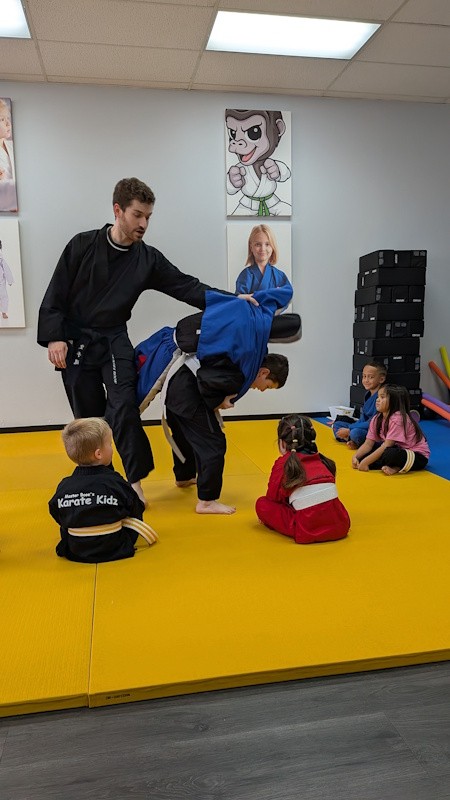
Jiu Jitsu is definitely worth it for kids, to help them improve their gross and fine motor skills. It has been shown to help reach important milestones like: balance, coordination, strength, flexibility, and other physical developments.
(What’s the difference between gross and fine motor skills? Here is an article from Brown Health University detailing the difference.) Judo and Jiu Jitsu help little minds and bodies develop both gross and fine motor skills.
Where has it been shown to help improve physical milestones, you may ask? I’ve gathered some research that will hopefully bring some legitimacy to my claim.
Judo
This source from the Journal of Clinical Medicine, focused on ages 5-15 and Judo specifically (Judo is derived from Jiu Jitsu and is the father of Brazilian Jiu Jitsu, as discussed above). It found “favorable” results among those who participated in Judo.
Here are some of things they found improvement in:
Muscular Strength
Balance
Coordination
Motor growth (i.e. development)
As with all studies and research, this doesn’t mean that Judo or any other Jiu Jitsu style is the only means by which they improved. There are certainly other causes, but that doesn’t negate the potential benefits suggested by the scholarly article.
Judo, with younger ages
This next study in the Brazilian Journal of Physical Education and Sport was focused on slighter younger ages overall, with ages 6-10 participating. Like above, they found improvement with the motor skills you want at these ages.
Grappling as physical activity itself, which is a core part of Judo and the broader Jiu Jitsu, is being suggested as being beneficial by these findings.
What Age Should A Kid Start Jiu-Jitsu?
We have a better understanding of what Jiu Jitsu is, and why it’s good for kids to at least try it. But, when should they try it? Should it be started as early as possible, in order to get the most out of it. Or, should a child wait until they have an overall better physical and mental ability to progress in the art? What age should a kid really start Jiu Jitsu?
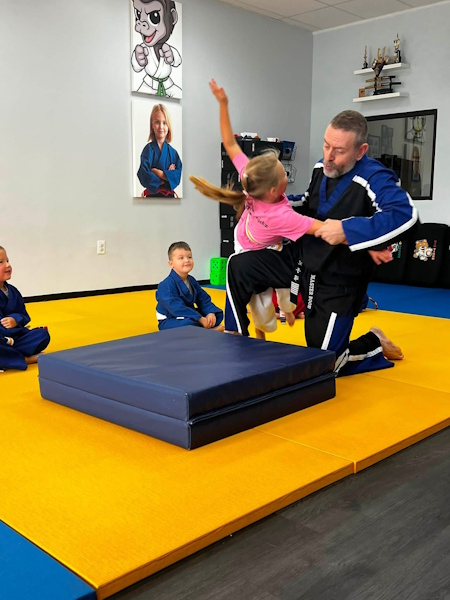
The best ages to start Jiu Jitsu incorporating locks and other adult techniques is the teen years. In a kids only designed program where falls, takedowns, and positioning is emphasized over locks and choke holds, Judo and Jiu Jitsu for 2 year olds are great.
Even preschoolers can start to reach major milestones that position them to be perfect for Jiu Jitsu. Their listening skills, ability to be in a class like setting, and physical capabilities will definitely benefit.
What we do at Master Booe’s Karate Kidz is incorporate a rotating curriculum across many styles (including Jiu Jitsu). Preschoolers and the Martial Arts? Here's my article discussing Karate and preschoolers.
When Should I Start My Child In Jiu Jitsu?
I would argue that the best age is as soon as they can. Why? Any activity takes more than a few sessions to really see any improvement. For some it might take months, others even years.
Here is an scholarly article from the Scandinavian Journal of Medicine & Science in Sports, where they studied children from age 4 to 5, one year in total. What they found suggested developing their crucial motor skills early would predict better performance as they aged.
Another study from the Journal of Adolescent Health took a look across a much longer span of time. It came across similar results too. Those who developed their motor skills earlier benefited from later through their activities in adolescence.
The Takeaway…
If you encourage your child to develop their physical skills early, it will have lasting benefits. Does that mean every kid should try Jiu Jitsu or Karate as soon as they can walk? No.
What it does mean is if they can do it, they should give it a shot. It would be in their best interest to try it as young as they can, and even yours too. Every parent wants to see their little one grow stronger and more confident.
We give all kids a FREE trial lesson to find out just this sort of thing. You can set up one for your child here.
Can I Put My 3 Year Old In Jiu-Jitsu?
How do I know if my child is ready? How early could they feasibly start? Starting with one of the most commonly asked questions among parents: can I put my 3 year old in Jiu Jitsu?
Yes, 3 year olds can do Jiu Jitsu in an environment that is catered to them. With a preschool mindset, a dojo should have smaller classes, smaller mats, and preferably just one teacher. A class of Jiu Jitsu for 3 year olds should mirror the religious, preschool, or daycare classes already being introduced to them at that age.
At our dojo we incorporate a lot of the thought processes used in daycares, where the environment is meant to make little ones comfortable in a class-like structure.
Smaller Classes
3s and other preschool aged children are tiny (shocking, I know). The more kids, parents, and instructors are in a room, the more 3s are reminded of that basic fact.
Smaller Mats
Likewise, the room itself is something that can cause friction. Having a smaller mat, and smaller room, lets a 3 year old feel as if they belong there. The decor and color pallet are equally as important. A room with dark colors or adult oriented pictures is not what a little 3 year old wants.
One Teacher
Arguably the most important quality altogether, the instructor. The master or sensei is paramount in making a fun and safe environment for little ones. Yet, having more than one in a class can cause confusion for preschool aged children. With too many leaders in a class, they don’t always know where to look and who to follow. This also means that the number of students in each class should be kept reasonable for their age range.
At 3, kids struggle to develop the connection and trust needed for their instructor. This is so that the sensei can become a proper role model. Kids learn by playing, and following. A good teacher should be able to teach through play, and be engaging enough for little ones to follow.
Can I Put My 2 Year Old In Jiu-Jitsu?
Many parents think that their young 3 year old might be ready to start trying out activities, and that’s mostly true. In the right environments, a 3 year old could thrive. There is one age even younger, tinier, and grumpier, the two year old. Can I put my 2 year old in Jiu Jitsu?
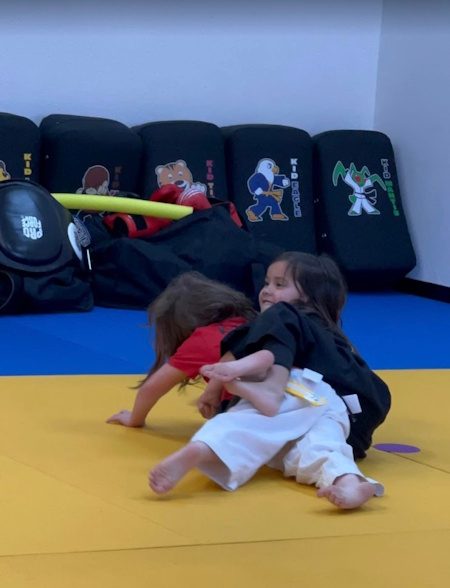
Jiu Jitsu can be hard for little 2 year olds, especially the grappling aspect of the style. A dojo that caters to a 2 year old's needs might find success, but that depends heavily on the instructor and environment. We find that many but not all 2s can do it.
Jiu Jitsu is a style that focuses on grappling, wrestling, holding, and other overt physical movements. This can be difficult for 2s, especially younger 2s (i.e. those who just turned). Very simple throws, practice falls, and minor wrestling is possible but with modification.
We allow 2s at our Dojo, but we understand not all are ready. And that’s okay. Some need to wait till their older, while others can get a head start.
Whether or not a 2 year old is ready depends on them first, then the sensei and the place factors in.
(We incorporate Jiu Jitsu, Judo, and BJJ in our blended style for all young ages. Want your 2 year old to give it a try? Click this link for more info!)
Is 3 times a week Jiu Jitsu enough?
How often should a kid attend class a week? Is just one time a week too little, and as such they won’t progress? Or, will my child get burnt out if they go too often? These are very important questions for kids, partially those of the preschool age. Most schools would want you to come three or more times a week.
Is 3 times a week for Jiu enough?
For the best progress in any particular Martial Art, Jiu jitsu included, 3 times a week can be more than is needed. Younger ages would benefit from less classes a week, due to the increased stress it puts on them. More training can be done with parents and training aids at home.
With proper practice, kids can exceed regardless of how often they come. It would certainly take longer to progress if you’d come less a week, but it’s not a sprint. If you push young kids too hard they’ll just grow to hate Jiu Jitsu or Martial Arts in general.
I wrote about this very topic in this article here, where I even discuss how a child's desire to attend classes drop off after only a few months if they come too often.
In this article from the BMC Pediatrics, it studies young children and adolescents in Judo, Muay Thai, and other styles. It found the best results after nine months of study. This is well over the national average of dropout rate in Martial Arts if children are pushed to come multiple times per week.
The solution? I would suggest coming less with younger children, so they’ll see the most benefit. The only bad student is the one who quits.
Research Sources In Full
Lakes, K. D., & Hoyt, W. T. (2004). Promoting self-regulation through school-based martial arts training. Journal of Applied Developmental Psychology, 25(3), 283–302. https://doi.org/10.1016/j.appdev.2004.04.002
Does judo training contribute to the motor development of children and adolescents? A systematic review. Journal of Clinical Medicine, 14(7), 2439. https://doi.org/10.3390/jcm14072439
Silva, K. C. da, Nunes, N. C., Nascimento, L. E. C. do, Moraes, B. J., Dutra, G. da S., Fagundes, W. D. C. da C., Pereira, L. C., & Mazzoccante, R. P. (2026). Motor coordination and executive function of judo practicing children. Brazilian Journal of Physical Education and Sport, 39, e39184262.
Duncan, M. J., Hall, C., Eyre, E., Barnett, L. M., & James, R. S. (2021). Pre-schoolers fundamental movement skills predict BMI, physical activity, and sedentary behavior: A longitudinal study. Scandinavian Journal of Medicine & Science in Sports, 31(S1), 8–14. https://doi.org/10.1111/sms.13746
Barnett, L. M., van Beurden, E., Morgan, P. J., Brooks, L. O., & Beard, J. R. (2009). Childhood motor skill proficiency as a predictor of adolescent physical activity. Journal of Adolescent Health, 44(3), 252–259. https://doi.org/10.1016/j.jadohealth.2008.07.004
Saraiva, B. T. C., Tebar, W. R., dos Santos, A. B., Antunes, E. P., Silva, S. C. B., Furuta, D. T., Ferrari, G., Delfino, L. D., & Christofaro, D. G. D. (2025). Effects of different modalities of combat sports on the motor skills of children and adolescents. BMC Pediatrics, 25, Article 562. https://doi.org/10.1186/s12887-025-05814-2